
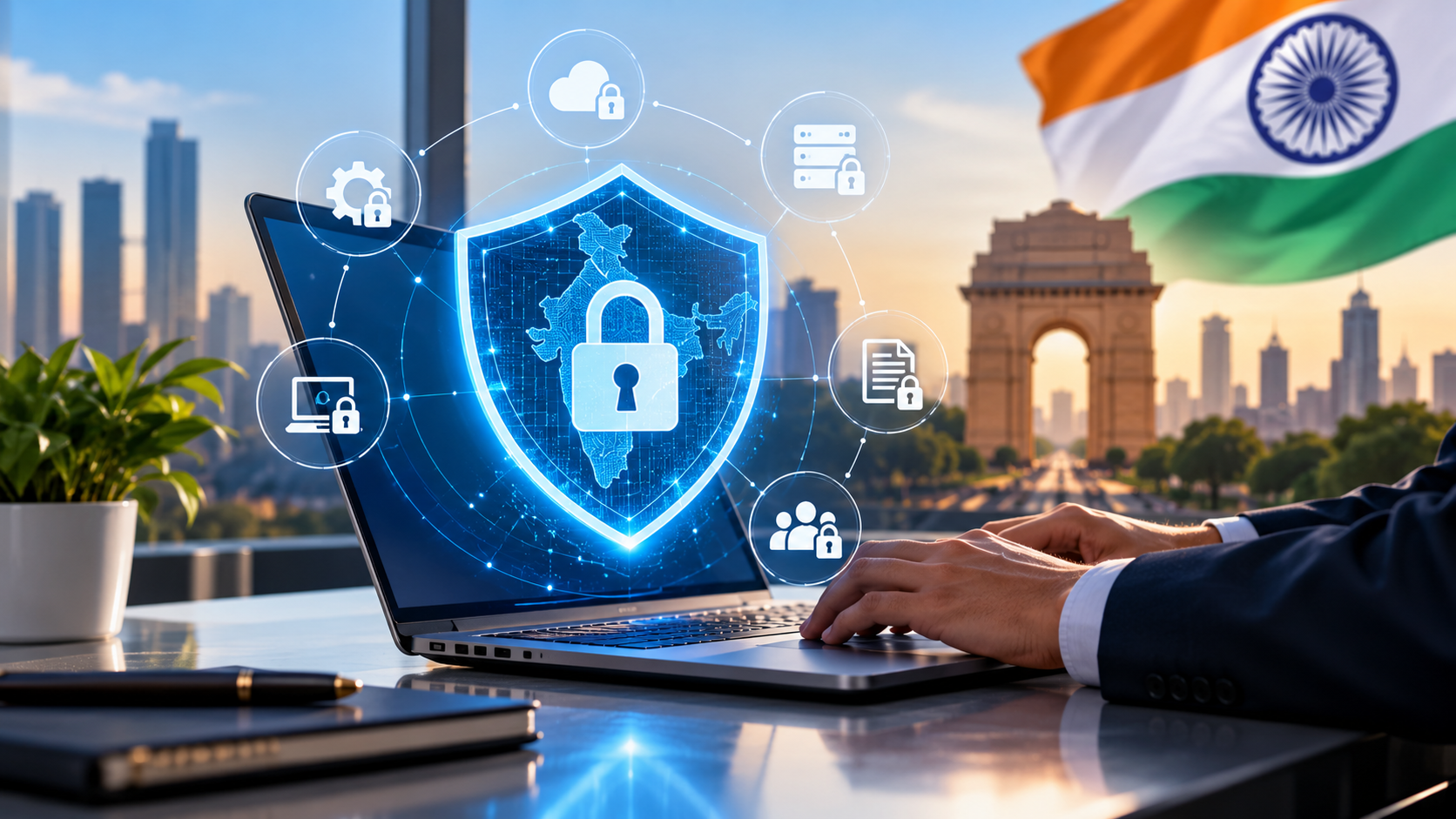
When Indian businesses think about cybersecurity, they typically focus on endpoint protection — antivirus software on laptops, two-factor authentication on email accounts, and firewall appliances at the network perimeter. These are necessary. But the telecom layer — the voice calls, SIP trunks, cloud PBX systems, and leased line connections that run your daily operations — is often left completely unprotected.
This gap is increasingly exploited. VoIP fraud (also called toll fraud or SIP fraud) costs businesses globally over $3 billion annually. Businesses in India running unprotected cloud PBX or SIP trunk systems are active targets. This article covers the specific cybersecurity risks in business telecom, and what Indian businesses should be doing about them.
Telecom-Specific Cybersecurity Threats Indian Businesses Face
VoIP Toll Fraud
Attackers scan the internet for exposed SIP endpoints — Cloud PBX systems, SIP trunks, or IP phones that are reachable from the public internet without adequate authentication. Once they gain access, they route thousands of calls to international premium rate numbers, running up bills of ₹5–50 lakh in a single weekend before the business notices. Most SIP trunk contracts make the business liable for fraudulent calls made through their authenticated account.
Call Interception and Eavesdropping
Unencrypted VoIP calls (SIP without TLS/SRTP) can be intercepted on the network path between your office and the provider's servers. For businesses discussing sensitive commercial information, financial terms, or patient details over the phone, this is a serious data protection liability under the DPDP Act 2023.
DDoS Attacks on Communication Infrastructure
Distributed Denial of Service attacks targeting your internet connection or your Cloud PBX platform can render your entire communication system inoperable. For call centres and customer-facing businesses, even a 2-hour outage translates directly to lost revenue and reputational damage.
Phishing via SMS and Voice (Vishing/Smishing)
Attackers use bulk SMS gateways and spoofed caller IDs to impersonate your business — sending customers fraudulent payment links or instructions from what appears to be your number. With the growth of SMS-based fraud in India, this damages your brand even when your own systems are secure.
★ The DPDP Act 2023 and Telecom Data Obligations ★
India's Digital Personal Data Protection Act (DPDP Act) 2023 creates clear obligations for businesses that process personal data — and all communication data falls within scope. Call recordings containing customer names, account numbers, or financial information are personal data. SMS databases with customer phone numbers are personal data. Contact centre CRM records are personal data.
Under the DPDP Act, businesses must: obtain verifiable consent before collecting personal data, implement appropriate security measures to protect data, notify the Data Protection Board in the event of a data breach, and retain data only as long as necessary for the stated purpose. Non-compliance carries penalties of up to ₹250 crore.
For businesses managing call recordings, customer SMS opt-ins, and contact centre data, this is not a theoretical risk — it is an active compliance requirement that needs to be addressed now.
Practical Cybersecurity Steps for Business Telecom in India
▸ Enable SIP TLS and SRTP encryption on your Cloud PBX and SIP trunks — this encrypts both the call signalling and the voice media, preventing interception
▸ Implement IP whitelisting on your Cloud PBX — restrict access to the management dashboard and SIP registration to known IP addresses only
▸ Set call spending limits and alerts — configure your SIP trunk or Cloud PBX to alert you when call spend exceeds a daily threshold, and automatically suspend if the limit is significantly breached
▸ Use a managed firewall at your network perimeter — inspect all traffic entering and leaving your network, block known malicious IP ranges, and implement application-layer filtering
▸ Enforce multi-factor authentication on all cloud communication platforms — Cloud PBX admin consoles, SMS gateway platforms, and video conferencing portals
▸ Choose providers with Indian data centres — for compliance with the DPDP Act, ensure call recordings and customer communication data are stored on servers within India
Cybersecurity Solutions Available Through Telecoms Supermarket India
Telecoms Supermarket India connects businesses with cybersecurity providers that specialise in the intersection of network security and telecom infrastructure — including managed firewall services, SIP fraud prevention platforms, encrypted VoIP solutions, and DPDP Act compliance consulting. We compare providers on your specific requirements so you are protected without overspending.
Conclusion...
Cybersecurity today is no longer limited to firewalls, antivirus software, or endpoint protection. For Indian businesses operating in an increasingly connected and cloud-driven environment, the telecom layer has become a critical entry point for cyber threats—yet it remains one of the most overlooked.
From SIP trunking and VoIP systems to cloud calling and network infrastructure, unsecured telecom channels can expose businesses to fraud, data breaches, toll bypass attacks, and service disruptions. As communication becomes the backbone of customer engagement and operations, ignoring telecom security is no longer an option.
The key is to adopt a holistic cybersecurity approach—one that integrates IT, network, and telecom security into a unified strategy. This includes securing voice traffic, implementing encryption, monitoring call patterns, and ensuring compliance with evolving regulations in India.
This is where expert guidance makes a real difference. Telecoms Supermarket India plays a vital role in helping businesses:
➜ Understand hidden risks in their telecom infrastructure
➜ Compare secure, compliant solutions across providers
➜ Implement cost-effective and future-ready communication systems
➜ Ensure ongoing support, monitoring, and optimisation
In a landscape where threats are constantly evolving, businesses need more than just tools—they need the right strategy and the right partner.
Because true cybersecurity isn’t just about protecting data—it’s about securing every layer of your business communication.