
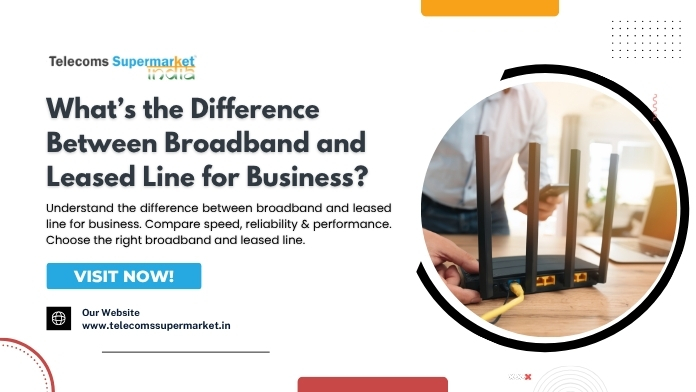
Selecting the correct internet connectivity is a vital choice for companies, whether small firms or big business organisations. The two most typically contrasted possibilities are broadband and leased lines. Both share a basic goal of providing internet access, yet they vary enormously in performance, price, reliability, and the type of control they offer to companies.
Understanding the key differences between broadband and leased lines enables organisations to make an informed decision that suits their specific requirements, objectives, and operational needs. This examines the fundamental advantages and disadvantages, as well as the practical uses of each connectivity option.
What is a Broadband?
Broadband is a fast internet connection widely applied in residences and small business offices. It offers access using a common infrastructure, whereby many users within a specific location share the same bandwidth. It's easily accessible, reasonably priced, and straightforward to install.
Various technologies, including DSL, cable, and fibre, can provide broadband. The majority of broadband services offer fast download speeds but lower upload speeds, which are generally adequate for general internet usage, such as browsing, watching online videos, or limited file transfers.
However, because many people share the broadband, its performance fluctuates depending on the time of day. At times when many are online, bandwidth is being allocated, and frequently, this means that the internet becomes slower.
What is an Internet Leased Line?
An Internet leased line is a dedicated internet connection used by a single customer for their exclusive use. Unlike broadband, a leased line is not shared among users, which guarantees consistent and symmetrical speeds—both upload and download speeds are the same.
Internet Leased lines are typically provided via fibre optic cabling and include a Service Level Agreement (SLA) that ensures performance, uptime, latency, and response times. Internet Leased lines are specifically designed for mission-critical operations, high-speed data transfers, VoIP calls, cloud services, and video conferencing, among other applications.
Companies that rely on stable and fast internet connectivity for their daily operations or to serve clients in real time generally prefer leased lines over broadband.
Key Differences Between Broadband and Leased Line
Although broadband and leased lines may both seem to provide high-speed internet, their underlying technologies and service commitments make them fundamentally different. Here's a detailed comparison across various parameters:
1. Connection Type and Speed Symmetry
Broadband connections are typically asymmetrical, meaning download speeds are higher than upload speeds. This setup works fine for home use or small businesses that do not require extensive data uploads. However, for companies that run cloud-based systems, need to upload large files regularly, or depend on VoIP and video calls, this can be a limitation.
On the other hand, leased lines offer symmetrical speeds. Whether you're uploading large datasets to the cloud or hosting video conferences, the consistent upload and download speed helps maintain workflow efficiency without lags.
2. Dedicated vs. Shared Bandwidth
A significant distinction between broadband and leased lines lies in the way bandwidth is shared. Broadband uses a shared infrastructure where multiple users draw from the same pool of bandwidth. This shared nature can result in fluctuating speeds and lower reliability, especially during peak usage times.
Internet Leased lines provide dedicated bandwidth. The entire capacity of the leased line is reserved exclusively for the subscribing business. This results in guaranteed performance with no impact from neighbouring users' activity, making it ideal for companies that require consistent connectivity at all times.
3. Reliability and Uptime
Broadband connections typically do not come with a guaranteed uptime or rapid fault resolution. Outages can occur, and repair times may vary depending on the service provider's support policy. This can be disruptive to business operations, especially those that rely on 24/7 online access.
Leased lines come with SLAs that outline guaranteed uptime (often 99.9% or higher), fault resolution time frames, and performance metrics. These assurances are crucial for businesses running customer-facing platforms, remote teams, or cloud-based infrastructure that demands uninterrupted connectivity.
Companies offering customer engagement platforms, such as Best IVR Service Provider in India, benefit significantly from this guaranteed and reliable connectivity, especially when managing a high volume of real-time communication traffic.
4. Latency and Performance Consistency
Latency refers to the delay in data transmission between two points. Low latency is crucial for real-time applications such as online gaming, video conferencing, and VoIP communications.
Broadband, due to its shared nature, often experiences variable latency. Users may experience delays during high-traffic hours, which can impact the quality of real-time communications.
Leased lines maintain consistently low latency, ensuring smoother performance in real-time applications. This performance consistency gives leased lines a significant edge over broadband for enterprise-grade communications.
5. Scalability and Customisation
Broadband packages are usually fixed with predefined speed limits and limited flexibility. While they may be suitable for startups or home-based businesses, growing enterprises might quickly outgrow these plans.
Leased lines offer higher levels of scalability. Businesses can opt for bandwidth that suits their current needs and upgrade as they grow. Furthermore, leased line services can be tailored to meet specific business requirements, such as secure connectivity between multiple office locations.
Businesses that rely on cloud platforms or customer messaging solutions, like those offered by an SMS Service Provider in India, find leased lines highly advantageous due to their customisability and stability.
6. Security and Control
While broadband networks are secure to an extent, the shared nature of these connections makes them more vulnerable to breaches or performance compromises due to external traffic.
Leased lines, being dedicated, offer better control over network security. Businesses can implement custom firewalls, private VPNs, and other advanced network security measures to protect sensitive data.
Industries such as defense, aviation, and maritime often use Satellite Communication Services, which require advanced secure connectivity. For these sectors, leased lines offer the level of control and security that broadband cannot ensure.
7. Installation and Cost
Broadband is quick to install and generally low in cost, making it a go-to choice for startups or small businesses that need an affordable internet solution with basic requirements.
Leased lines require more time and resources for installation, particularly if fiber infrastructure needs to be laid. The cost is significantly higher, but businesses are paying for reliability, performance, and service assurance that broadband cannot offer.
Firms investing in Call Automation technologies for lead generation, customer service, or backend automation often choose leased lines to ensure real-time, uninterrupted communication with zero delays or missed signals.
Which One Is Right for Your Business?
The decision between broadband and Internet leased lines depends on several factors, including the size of your business, your internet usage patterns, your reliance on cloud-based or communication tools, and your budget.
Broadband is suitable for:
* Small businesses or startups with limited budgets
* Basic internet use like email, browsing, and occasional file downloads
* Environments where occasional performance drops are acceptable
A leased line is ideal for:
* Medium to large enterprises with high internet dependency
* Businesses requiring secure, uninterrupted connectivity
* Organisations running cloud-based systems, data centres, or remote operations
* Companies offering real-time customer support via VoIP or video calls
Final Thoughts...
While broadband and leased lines both offer internet connectivity, the experience, reliability, and overall service level they deliver are vastly different. Broadband may be cost-effective and easy to deploy, but its shared nature and limited guarantees make it less suitable for businesses with advanced or mission-critical requirements.
A leased line, though more expensive, delivers superior speed consistency, lower latency, high uptime, and a range of business-grade benefits that broadband cannot match. Businesses seeking future-ready infrastructure, particularly those that extensively leverage digital tools, will find leased lines to be a more strategic and long-term solution.
Making the correct choice starts with analysing your business needs—not just for today, but for what lies ahead. Whether you prioritise cost savings or consistent performance, understanding the difference between leased lines and broadband helps you align your internet connectivity with your business vision.